
Affiliate marketing brings a ton of opportunities for anyone looking to earn passive income online. There are quite a few ways to get involved, and picking the best affiliate marketing model for your goals can make a big difference in your results. I’m going to break down the main types of affiliate marketing models, so you’ll get a clear idea of how each one works and which might fit your style best.
Understanding Affiliate Marketing Models
Affiliate marketing is all about promoting someone else’s products or services and earning a commission for each sale or action that comes through your unique link. There isn’t just one way to set this up; companies use several structures to reward affiliates. Knowing these models is pretty handy because it helps you spot opportunities that align with your strengths, whether you love content creation, paid ads, or just building connections.
The affiliate marketing industry is already huge, with Statista reporting worldwide spending reaching billions annually. This growth means brands keep coming up with new strategies, which can get a little overwhelming for beginners. Picking the model that matches your niche and resources is a smart place to start.
Most affiliate models fall into a few major categories based on how and when affiliates get paid. These categories exist across nearly every industry, from lifestyle blogs and tech review sites to coupon websites and influencer campaigns.
Core Affiliate Marketing Models
The differences in affiliate programs usually come down to how payouts work. Here’s an overview of the most common payment structures and how affiliates operate within these models.
- Pay-Per-Sale (PPS): The classic model that most people think of when they hear “affiliate marketing.” Affiliates get paid a commission when someone makes a purchase via their referral link.
- Pay-Per-Click (PPC): Affiliates earn money for every click they drive to the advertiser’s website, even if no sale happens.
- Pay-Per-Lead (PPL): This setup pays affiliates when referred visitors take a specific action, such as registering an account, signing up for a newsletter, or requesting a free trial.
- Two-Tier Affiliate Marketing: This model rewards affiliates not only for their own sales or leads but also for recruiting other affiliates, sharing a small percentage of commissions from the “second level.”
So, let’s now have a look at the features I think you’ll really like for each model and the types of businesses or personalities they suit best.
Pay-Per-Sale (PPS) Affiliate Marketing
How it works: When someone clicks your affiliate link and ends up completing a purchase, you get a percentage of the sale or a fixed sum. Commissions here can be pretty generous for certain products, such as software subscriptions, online courses, or physical goods.
Why brands like it: Since brands only pay for actual sales, their risk is low, and the return on investment is easy to track.
Examples: Amazon Associates is a massive paypersale program in the physical goods space, while SaaS companies like Bluehost or Shopify also run PPS programs for their services.
Who it’s good for: Content creators, bloggers, YouTubers, or anyone who builds trust with their audience and can funnel engaged traffic to product pages benefit the most. This method often relies on highquality content, such as reviews, tutorials, or resource lists.
Pay-Per-Lead (PPL) Affiliate Marketing
How it works: Affiliates earn a commission every time a visitor from their link completes a desired action, like filling out a contact form, downloading an app, or starting a free trial. This can be easier than landing a sale, especially in “free signup” campaigns.
Why brands like it: This approach helps companies build email lists, qualify leads, or build their user base without needing an immediate sale.
Examples: Finance brands, insurance companies, and SaaS startups commonly use PPL. For example, personal finance blogs often promote credit card signups, while B2B businesses might pay for qualified sales leads.
Who it’s good for: Marketers who know how to optimize landing pages, funnel traffic, or run paid ads will likely see good results. It’s also a fit for influencers targeting engaged communities.
Pay-Per-Click (PPC) Affiliate Marketing
How it works: You make money any time a user clicks your affiliate link, no matter what happens afterward. There’s no need for a sale or signup. Commissions per click are smaller, but with enough volume, it adds up.
Why brands like it: Brands only pay for visitors to their site, and it works great when the goal is boosting awareness or getting fresh traffic quickly.
Examples: Coupon websites, price comparison platforms, and portals with high traffic often use PPC. Google AdSense shares some similarities, although it’s technically contextual advertising rather than traditional affiliate marketing.
Who it’s good for: Publishers, site owners with lots of traffic, or deal websites see the best results since volume matters more than depth of engagement.
Two-Tier Affiliate Marketing
How it works: This model pays affiliates for their own results (sales, leads, or clicks) but also rewards them for referring other affiliates. The original affiliate gets a small piece of commissions from their referrals’ actions.
Why brands like it: It’s a simple way to crowdsource affiliate recruitment and expand reach fast.
Examples: Hosting providers, education platforms, and toolkits for online business sometimes use twotier systems to quickly grow their affiliate base.
Who it’s good for: Networkers, marketers who can recruit and mentor new affiliates, and people who enjoy building communities may find this approach appealing.
Other Affiliate Marketing Models Worth Understanding
Some programs mix elements from the main categories, or use more specialized structures. Here are a few you might run into:
- Recurring Commission Models: These offer repeated payments as long as the customer stays subscribed (think software or membership sites).
- Revenue Share: Works like PPS but often pays over the customer’s lifetime; this is popular for subscription businesses and web hosting companies.
- CPA (Cost Per Action): This is an umbrella term that covers both PPS and PPL models, paying out when a predefined action (a sale, lead, signup, or download) is completed.
Sometimes you’ll also come across hybrid programs, where you get a smaller upfront payment for a lead plus a bonus if a sale happens later on. These are usually designed to encourage affiliates to focus both on quality and quantity.
Common Challenges and How to Work Around Them
Affiliate marketing can be really rewarding, but every model brings its own set of hurdles. Here are some you might run into, plus a few tips for working through them:
- Tracking and Attribution: Sometimes a sale or lead doesn’t get properly attributed, especially if there’s a long gap between click and conversion. Using trusted affiliate platforms and doublechecking tracking codes can help keep things accurate.
- Low Conversion Rates: Earning on PPC or PPL models can feel slow if users click through but don’t take the next step. Improving the quality of your content and traffic sources can give a boost to results.
- Program Changes: Programs can change commission rates or policies with little notice. Mixing in some variety among your affiliate partners is a smart way to protect your revenue.
- Compliance: You’ll want to stay in the loop with legal requirements like FTC disclosure rules so your reviews and referrals are transparent and your reputation stays solid.
Tracking and Attribution
Incorrectly tracked sales or leads can feel frustrating, especially after putting effort into content or paid ads. Choosing reputable affiliate networks, using up-to-date tracking links, and communicating with affiliate managers often gets things sorted before they get out of hand.
Low Conversion Rates
Clicks are only valuable if users convert. Building trust with your audience, recommending products you actually use, and transparency can really help with this issue.
Dealing With Program Changes
Affiliate terms can switch up quickly. Keeping a list of reliable programs and rotating offers regularly can help keep your revenue streams stable, even when one program makes an unexpected change.
Compliance
Following disclosure requirements is really important to preserve credibility. You don’t want your hard-earned work wiped out because of a missing disclaimer or lack of transparency.
Getting started with affiliate marketing is more about picking a method you enjoy and committing to learning the ropes over time. As you experiment with different types, your favorite model might mix it up as your skills and audience grow.
Real-World Examples for Each Model
Tons of popular sites make use of these affiliate structures in one way or another. Here are a few examples where each model thrives:
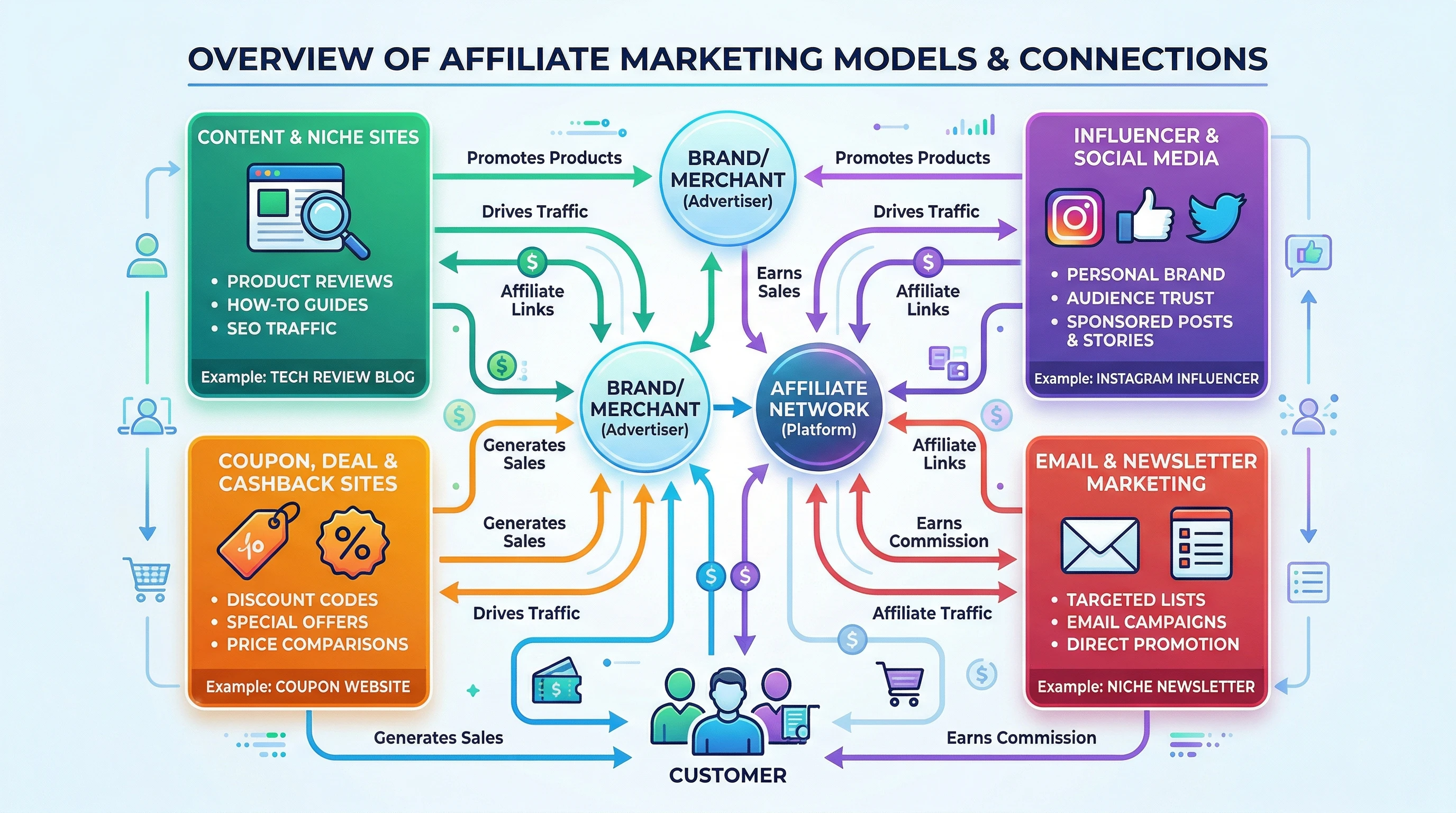
- Coupon and Deal Sites: Use PPC or hybrid models to deliver traffic to offers and earn on volume.
- Tech Review Blogs: Mainly run on PayPerSale with indepth product reviews linking to Amazon or direct brand partners.
- Email Marketers: Often use PayPerLead to promote digital services, trials, or finance apps straight from their lists.
- YouTube Creators: Lean on PPS or recurring commissions, embedding affiliate links in video descriptions for gear, apps, or courses.
I’ve personally seen “microniche” website creators pick hybrid models for the best of both worlds; steady leads and occasional sales bonuses. Seeing what works for others in your niche is super useful as you test different models.
Frequently Asked Questions
Everyone’s adventure through affiliate marketing is a bit different, but here are a few questions that pop up all the time:
Question: What’s the easiest affiliate marketing model for beginners?
Answer: PayPerSale is straightforward thanks to huge networks like Amazon Associates, but PayPerLead is less daunting if you’d rather not focus on selling products right away.
Question: Can you mix multiple affiliate marketing models?
Answer: Definitely. Many affiliates combine PPS, PPL, and recurring programs to mix in some variety for income and respond to audience preferences.
Question: How do you get approved for affiliate programs?
Answer: Most programs want to see your website or social channel first. Having basic content in place helps your application stand out. Many programs also offer instant approval for certain regions or types of sites.
Affiliate Marketing Model Basics: Where to Start?
Choosing the model that makes sense for your skill set and audience is really important early on. Bloggers and content creators often stick with paypersale because it rewards deep engagement, while marketers with experience in paid ads might jump straight to payperlead or PPC for faster feedback and earnings.
If you’re just getting started, experimenting with a couple of models, tracking your results, and gradually scaling up is a practical approach. Over time, experience will show you which model feels the most motivating to grow. Maximizing your results gets easier with consistency.